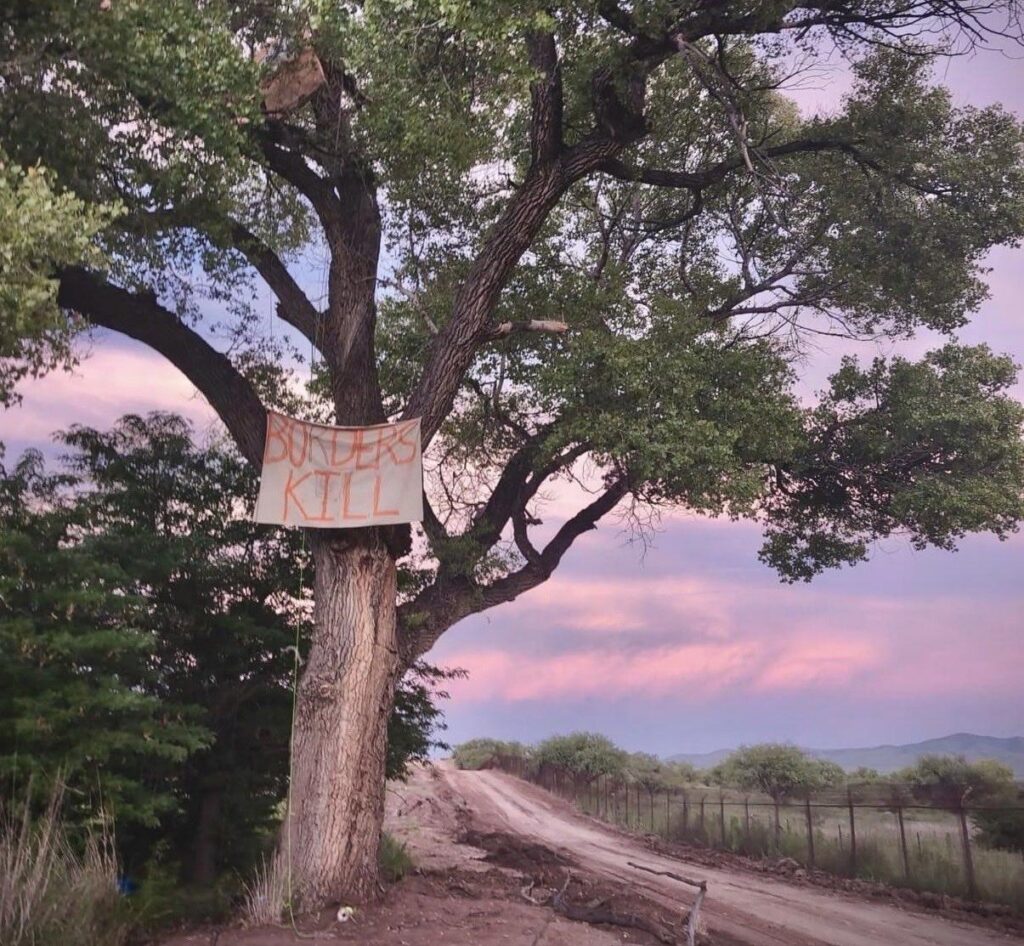
Almost two weeks ago, contractors working on a double border wall expansion project felled three 200+ year old cottonwood trees next to the existing border fence in the tiny town of Lochiel, Arizona. One person was arrested for standing in the way of machines, charged with trespassing and released the same day. The workers finished their day and left with one final tree still standing in the way of construction.
That night, a lone treesitter appeared in this tree, now affectionately referred to as Grandmother. Since then a platform has gone up and a base camp formed just a few feet to the north of the tree on some private property of a supportive rancher. Dozens of people in the surrounding area have mobilized to maintain the camp and the treesit, many of them becoming trained climbers themselves. All the while, there has been a steady stream of mainstream press coverage and semi-viral social media posts.
Lochiel has been the site of several cross-border “happenings” in recent years, often spearheaded by environmentalists in groups like Sierra Club and The Center for Biological Diversity, among others. These happenings have been relatively small and intimate, often including ceremonies and speeches from local indigenous people, progressive politicians, and even the county sheriff, who is a vocal critic of the border wall. The formation organizing those events has been very welcoming and supportive of the influx of radicals who have spearheaded the treesit and base camp.
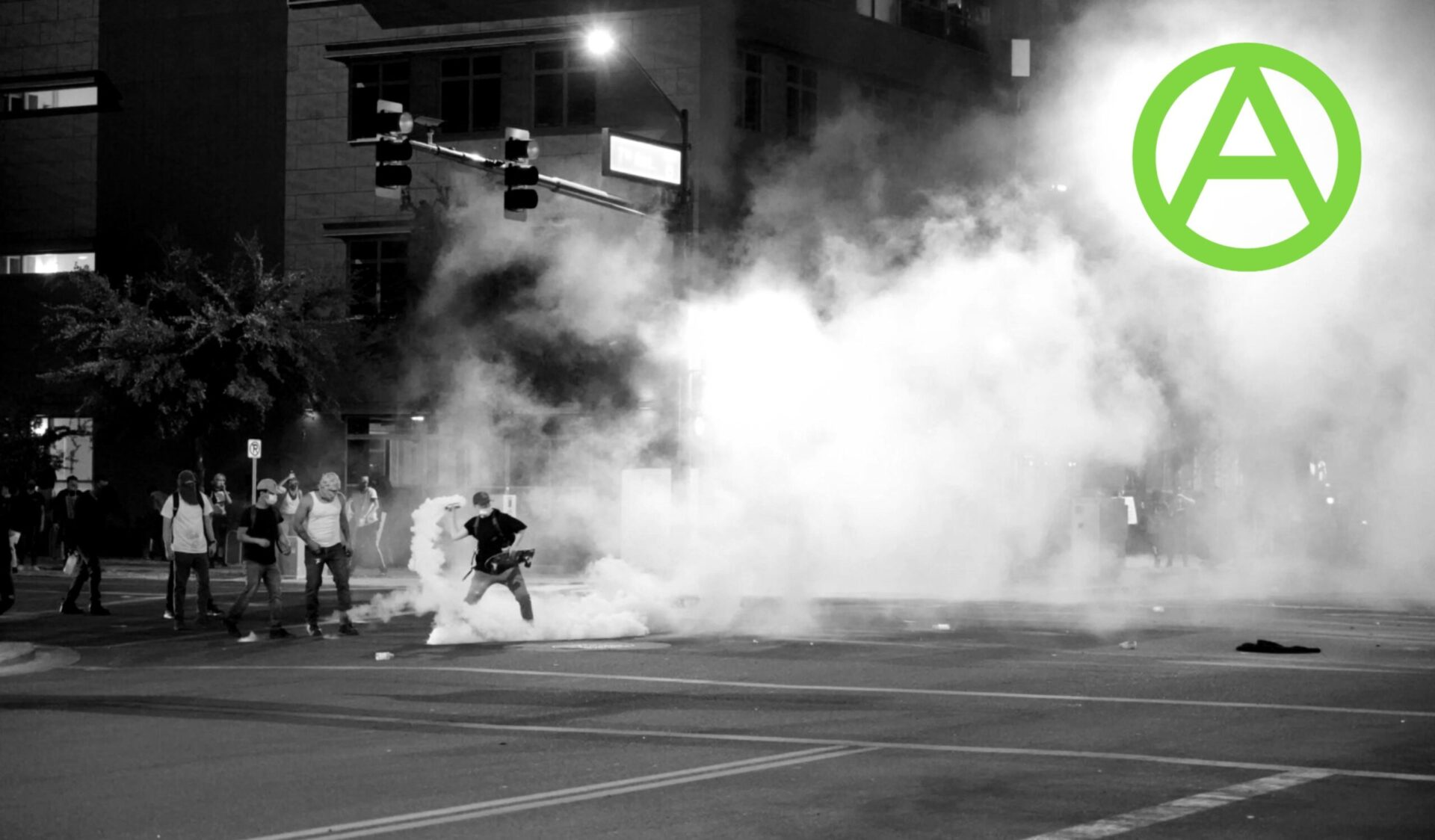
Earlier this week, the first offsite action related to this struggle happened. “Anarchists of the metropolis” disrupted the Tempe, AZ office of Fisher Industries, the general contractor overseeing this border wall project. As the list of smaller, local subcontractors grows, many opportunities for similar initiatives all over southern Arizona are revealing themselves.
This camp has illuminated a potential flashpoint for more widespread confrontation against the state, channeling the mounting frustrations against the Trump administration into clear targets with logistical vulnerabilities. Many are choosing to directly confront the machinery of state violence for the first time in their lives. People who spend time at camp are having transformative experiences, finding themselves more capable, courageous and driven to fight than they had previously believed.
If new initiatives continue to emerge, this could be just the beginning of a catalyzing cycle of struggle. The forces of tomorrow’s battles for liberation have an opportunity to converge, experiment, and train themselves today in the southern borderlands and at the offices and homes of complicit contractors.
With the current situation, every single person who comes to camp ready to work makes a huge impact. Skills in tree climbing and blockades are valuable, but all the work of maintaining a camp is just as needed. Anyone who is ready to get to work and bring conviviality to camp should start making plans immediately. Small, coordinated groups would be especially valuable. Even a few days at camp can be enough time to improve infrastructure, teach new skills, broaden political horizons and offer a break to the overworked locals.
Similarly, any efforts to expand the struggle could make big impacts. Fisher has operations in many states, and wall construction is underway or threatened all across the border, notably in Big Bend, TX, where a sizable campaign against it has been building. If accessible on-ramps to confrontation continue to open up, there seem to be many people eager to step into whatever roles they can.
For those who want to contribute to the building up of revolutionary forces, particularly if you come from anti-state and direct action backgrounds, here is a clear opening. Talk with your comrades where you live. Check in with your contacts in Arizona. Pool your resources and send a crew or even just one person to Lochiel as soon as you can. Find out how else you can contribute to the struggle, and take it as an opportunity to grow your own skills and invite new comrades into collaboration.
The incredible beauty of this land cannot be understated. Grandmother is situated in a lush valley full of towering cottonwoods and myriad wildlife. Epic lightning storms come out of nowhere. The arid climate is currently exploding with life from the generous monsoon rains. An absence of industrial noise leaves space for cicadas, coyotes, migratory birds, rustling cottonwood leaves and small cattle herds to be heard. Jaguars and ranchers alike ignore the imaginary line, casually stepping across to live freely as anyone should. Border patrol agents lurk along roadsides while white trucks and heavy machinery move workers and materials along a steep dirt road to strengthen the colonial infrastructure of severance. Amidst all of this, a handful of brave souls are hauling water jugs, rigging tarps, singing, dancing, dreaming and strategizing. You ought to come meet them.